12 hr
Iron Gate Gorge & Golubac Fortress Day Trip
- Expert local guide
- Small group
- Skip-the-line access
- Free cancellation
Golubac Fortress — Danube Gorge Ramparts & Reserved Entry
Ten towers hold the river's last wide turn, then the gorge closes.
Compare fares, pick the fit — all bookings are mobile-voucher and eligible for free cancellation where shown.
12 hr
10 hr
10 hr
| Experience | Duration | Rating | Pickup | Skip-the-line | Guide | Small group | Price | |
|---|---|---|---|---|---|---|---|---|
|
Guided Experience
Most popular
Iron Gate Gorge & Golubac Fortress Day Trip
|
12 hr | ★ 4.7 | ✓ | ✓ | ✓ | ✓ | €100 | Book → |
|
Guided Experience
Golubac Fortress & Iron Gate Gorge Speedboat Adventure
|
10 hr | ★ 4.8 | ✓ | ✓ | ✓ | ✓ | $68 | Book → |
|
Guided Experience
Danube Gorge Adventure: Golubac Fortress & Lepenski Vir
|
10 hr | ★ 4.9 | ✓ | ✓ | ✓ | ✓ | $126 | Book → |
Worth it — rare restoration, modest price
The 950 RSD Green zone basic entry buys more than a walk past a ruin, which is why an iron gate tour at Golubac holds up against pricier Danube attractions. Parking and visitor centre access are folded into that figure, so there is no drip of add-on charges before you reach the ramparts of what locals still call Golubački grad. What you are paying for is a finished restoration rather than a promised one: the ten towers were stabilised and reopened under an EU-funded programme, and the walls climb a limestone bluff at the point where the Danube narrows from roughly six kilometres wide into the Iron Gates gorge, Romania plainly visible across the water. That pairing of medieval fortification and Đerdap National Park scenery is rare, and iron gate tour tickets stay cheap by regional standards. It pays off for anyone drawn to castles, photographers, and drivers already on the Đerdap road. Value thins if you dislike stairs — the site is vertical, and the reward is the view, not a large artefact collection.
Bottom line: If you are anywhere on the Đerdap stretch of the Danube, the Golubac fortress tour earns its fee twice over.
Hand-picked experiences loved by thousands of travelers
11 hours
Free Cancellation
Journey through 8,000 years of history along the Danube's most dramatic gorges with fortress visit and boat ride
10.5 hours
Free Cancellation
Journey through Djerdap National Park by land and water, visiting ancient sites and cruising the Danube
9 to 11 hours
Free Cancellation
Explore medieval fortifications, ancient settlements, and dramatic Danube gorges on this full-day adventure
1 day
Free Cancellation
Journey through Serbia's medieval past at three stunning riverside castles along the Danube
9 hours
Free Cancellation
Journey through centuries of history visiting three remarkable fortresses and ancient Roman ruins along the Danube
10 hours
Free Cancellation
Discover medieval fortresses, ancient archaeological treasures, and dramatic Danube canyon scenery
10 hours
Free Cancellation
Journey along the Danube to medieval strongholds and sample traditional Serbian spirits at a family distillery
You leave the Danube road at Ridan bb and park beneath the cliff, the 950 RSD Green zone entry covering the car and the visitor centre in a single payment. Iron Gate Tour tickets are scanned at the lower gate, ten paces from the water.
Arrive when the doors open at 10:00 and the eastern wall is still throwing shade across the front town.
You start low. The path threads between curtain walls, past the timber gallery, and the noise thins to gulls and the wash of passing barges. You put a hand on masonry rebuilt in a paler stone, the joins left deliberately legible. Then the stairs begin: narrow, uneven, roped on the river side. You climb through the Hat Tower, duck under an Ottoman lintel, and come out on a parapet where the wind arrives without warning.
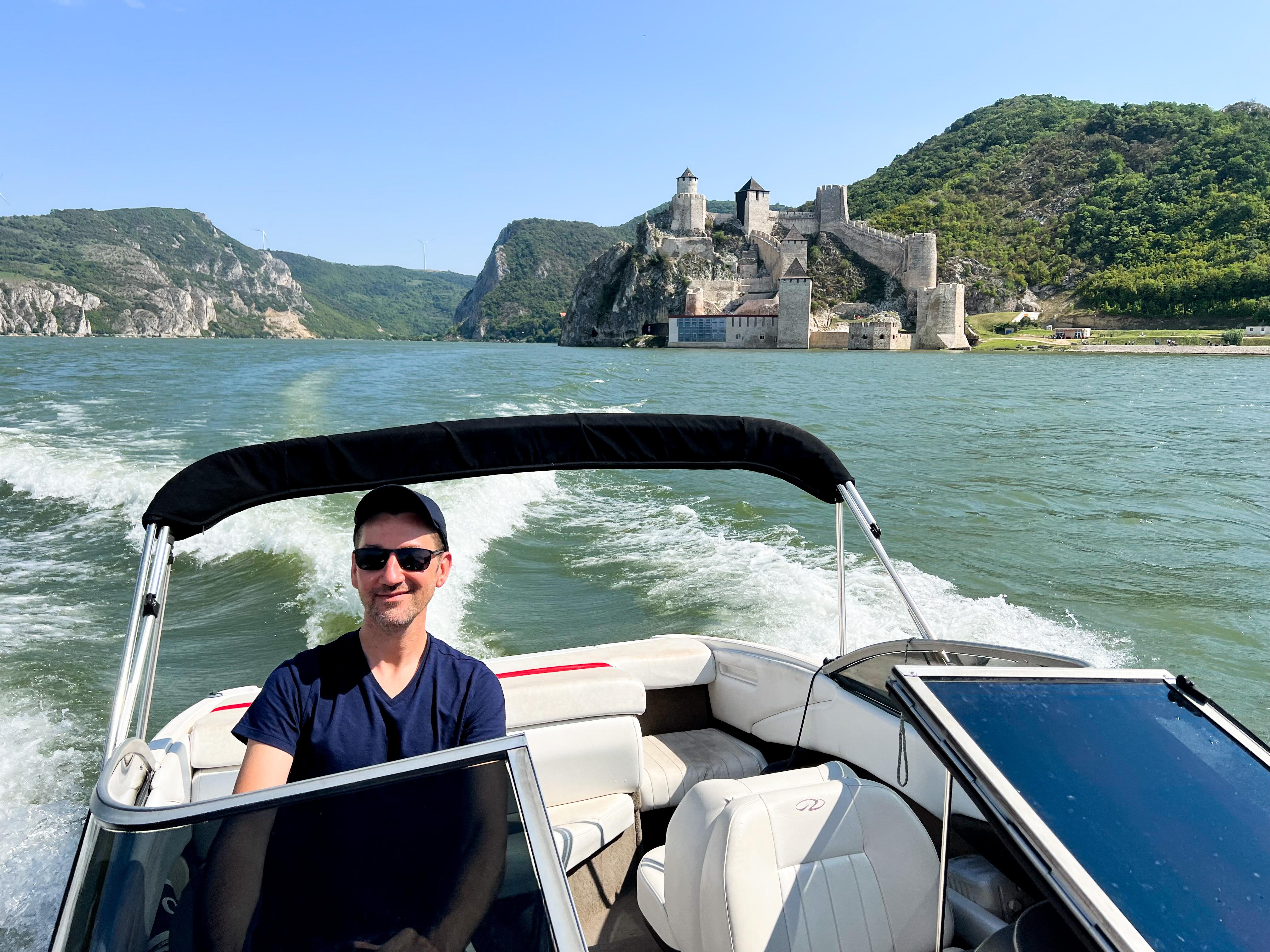
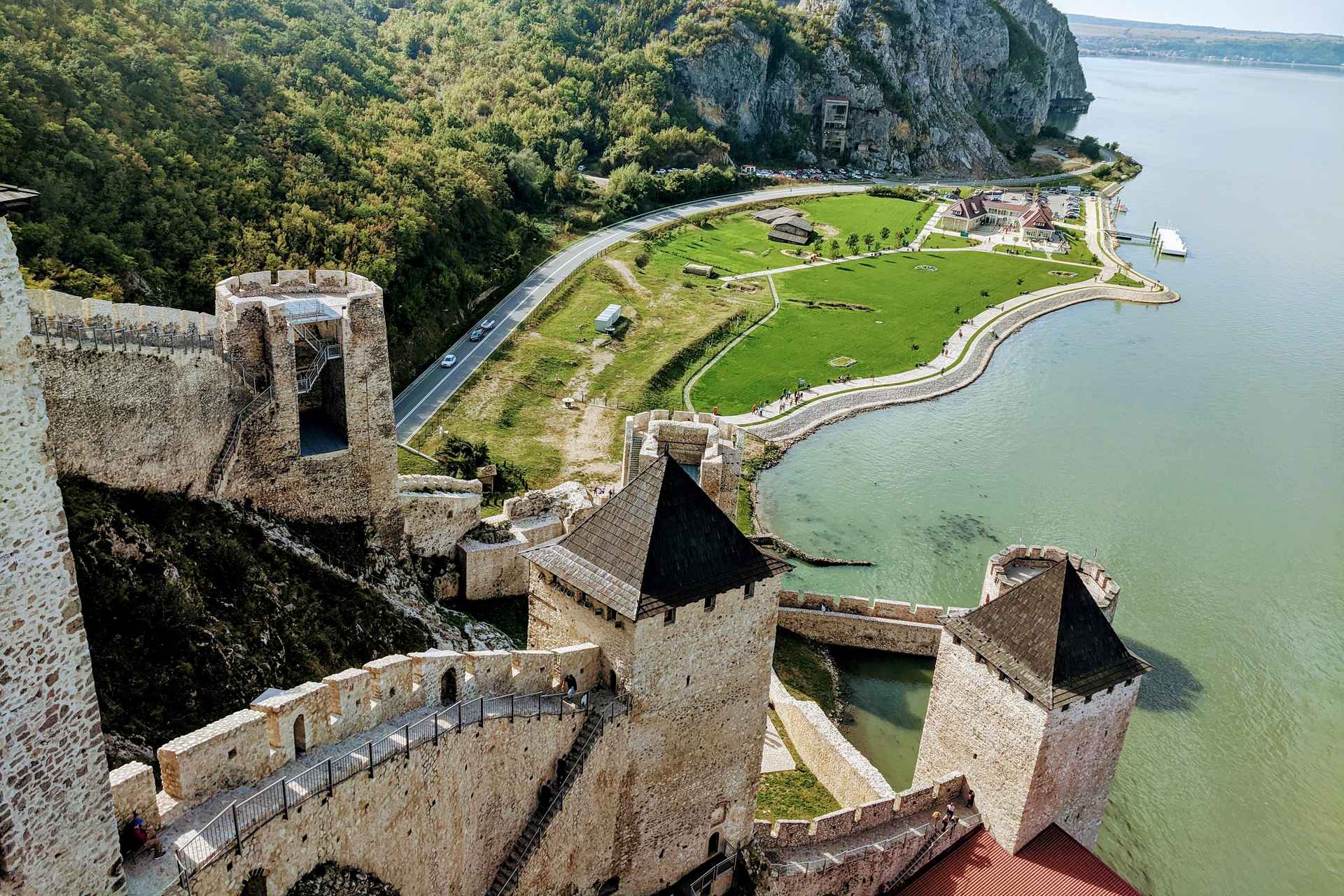
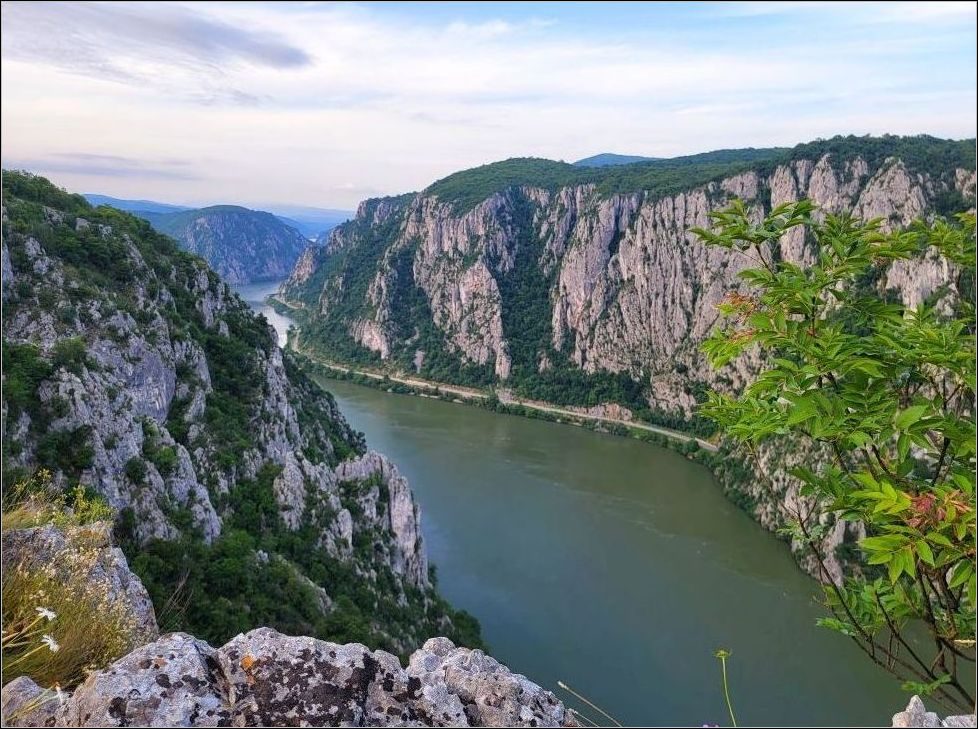
From there the Romanian bank sits a few kilometres off and, downstream, the black shape of Baba Kaj rock breaks the surface. An Iron Gate boat tour cuts a white line below you and vanishes into the gorge. You count towers along the spine of the ridge, ten of them, and follow the wall with your eyes to the keep. Going down you take the river-side stairs slowly, because the treads are worn smooth, and the last gate returns you to the car park before the 18:30 closing.
All the details about your upcoming adventure in one place
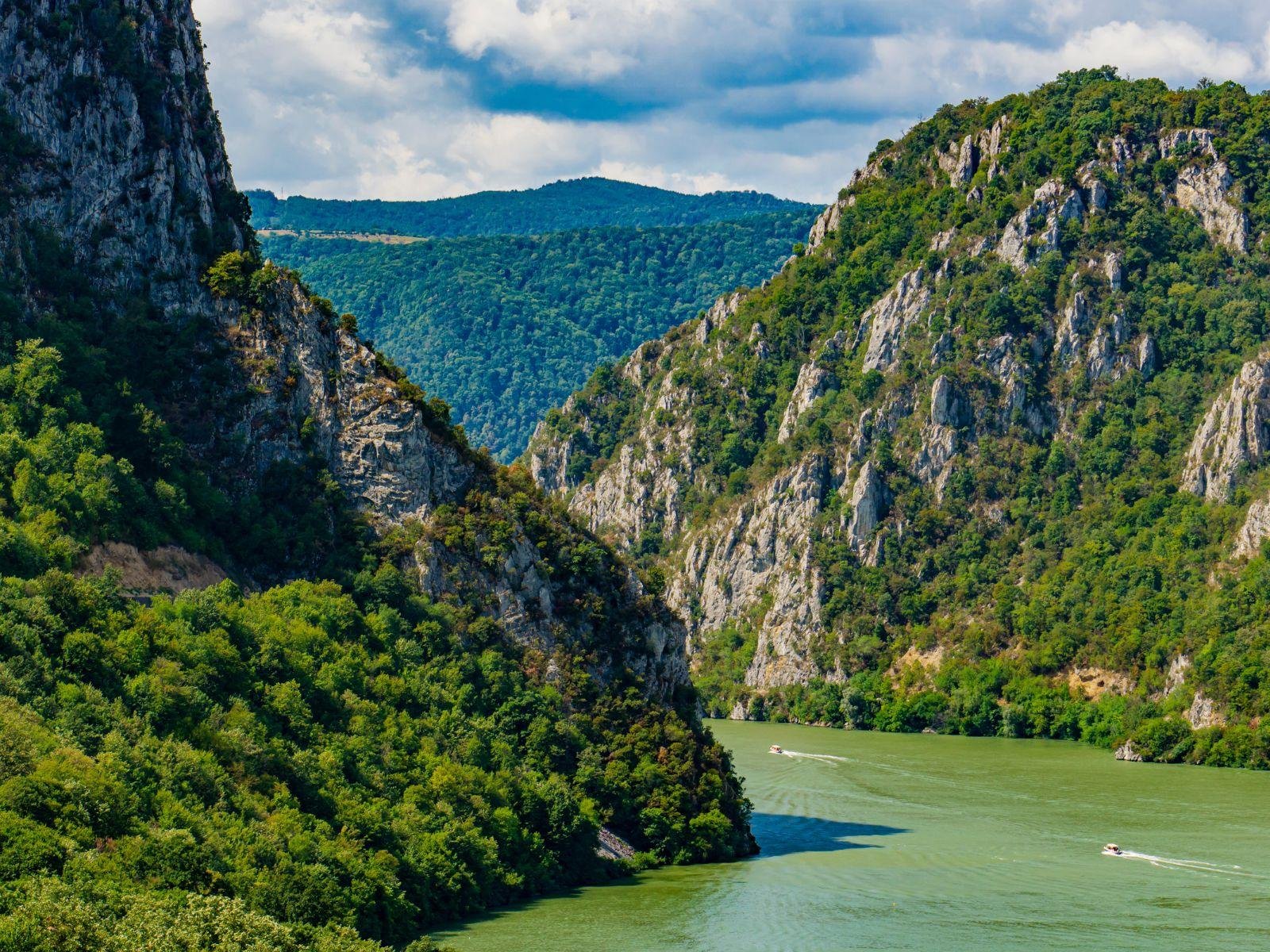
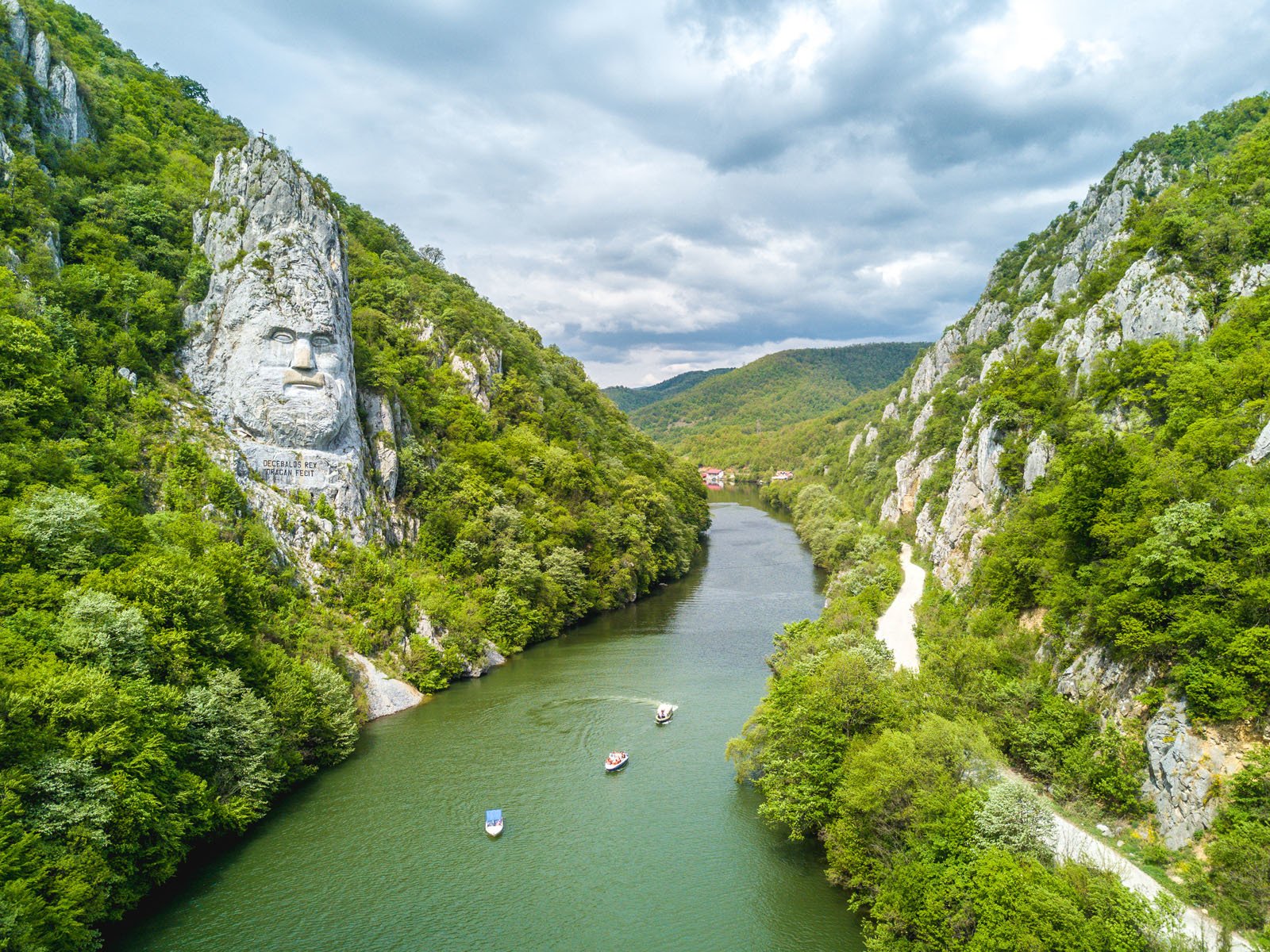
An iron gate tour brings you to the point where the Danube narrows into the Đerdap Gorge, with Golubac Fortress and its nine medieval towers standing guard at the entrance. Most Golubac Fortress tours pair the citadel walkways with a boat leg past the Lepenski Vir riverbank and the carved face of Decebalus on the Romanian shore. Đerdap ture, as they are known locally, run inside Đerdap National Park, so binoculars are worth packing for the white-tailed eagles overhead.
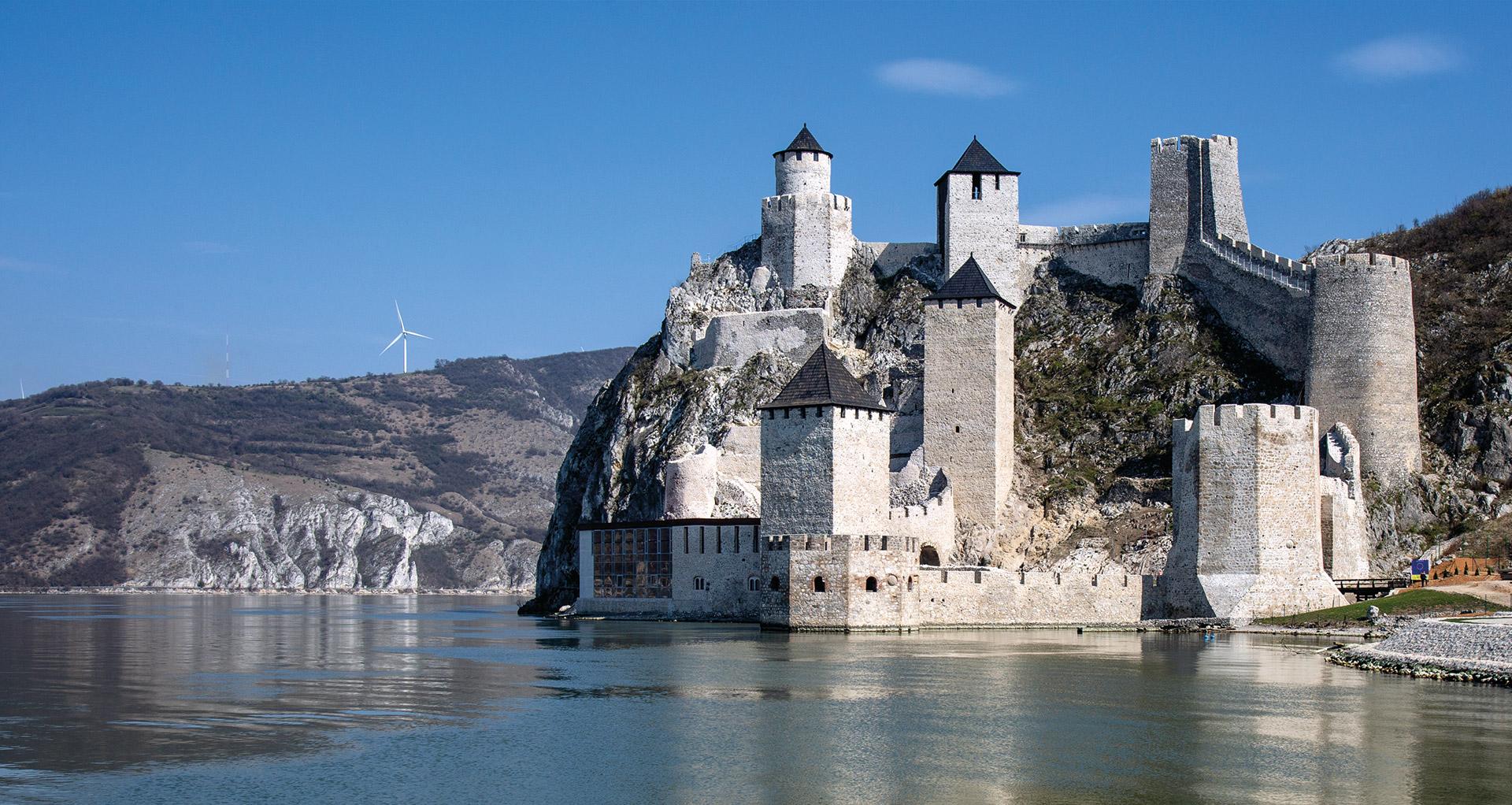
At Golubac the Danube spreads to nearly six kilometres across, close to the widest point in its whole course, then contracts within a few kilometres into a stone corridor a fraction of that width. The fortress stands on the hinge of that change.
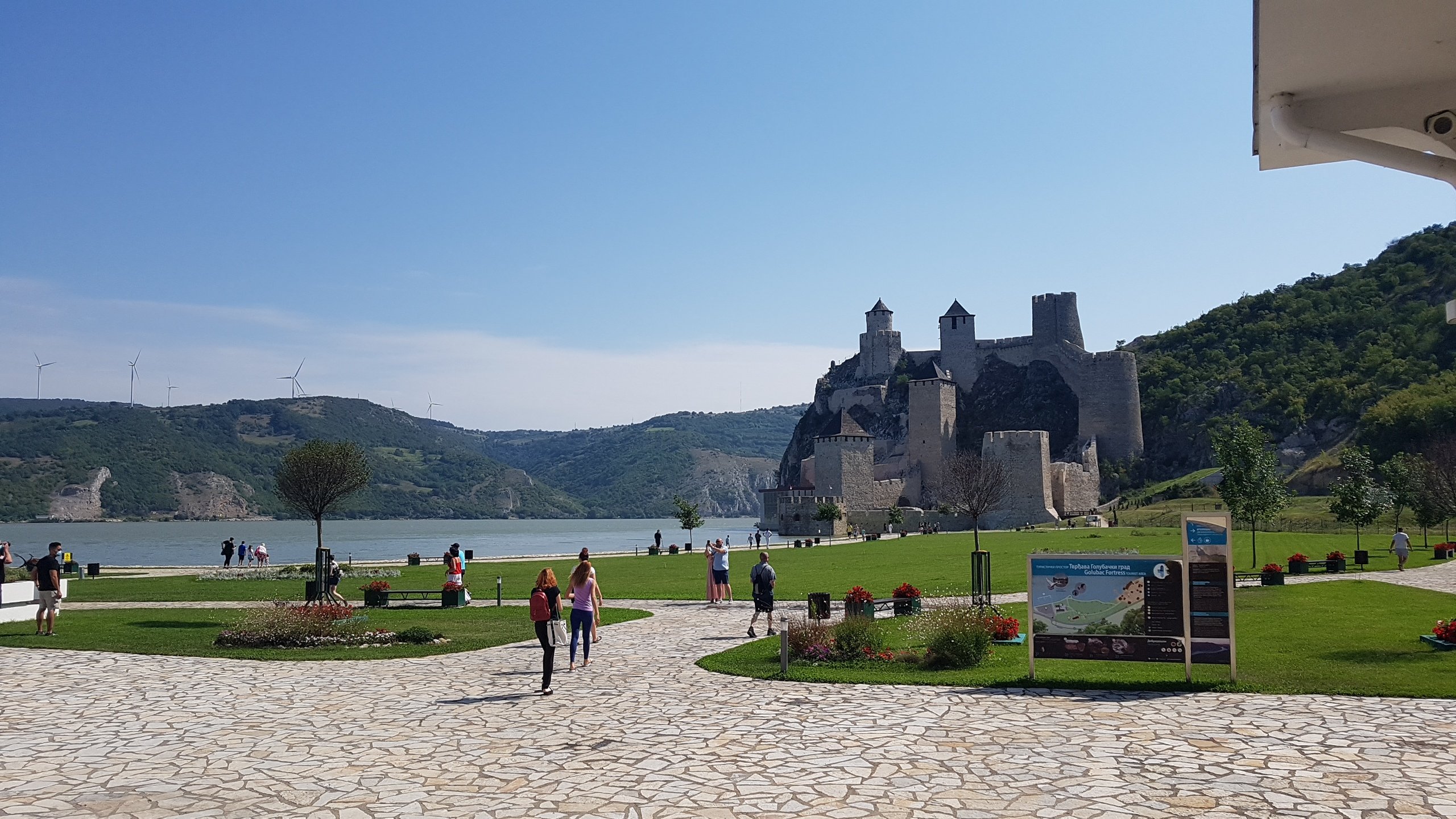
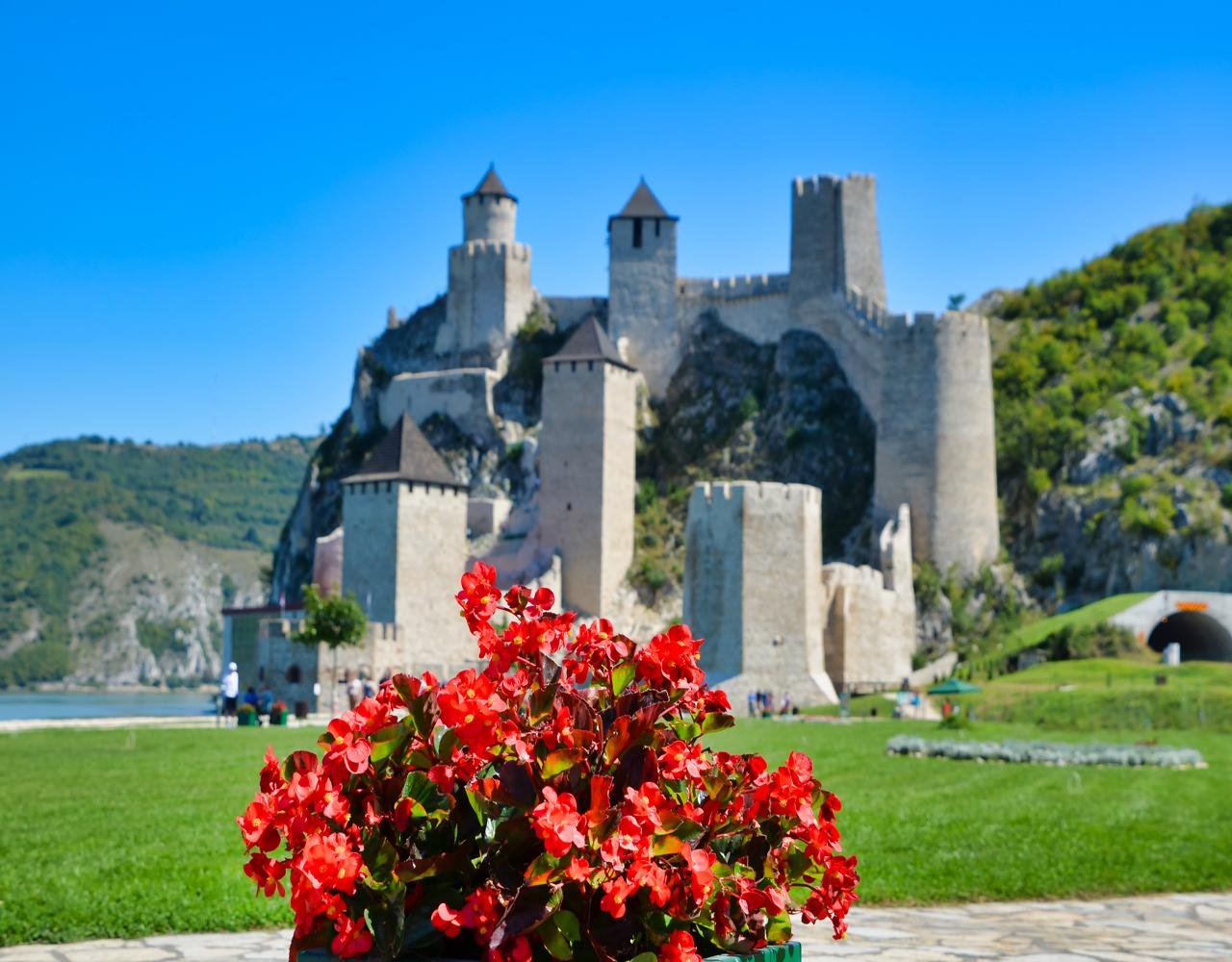
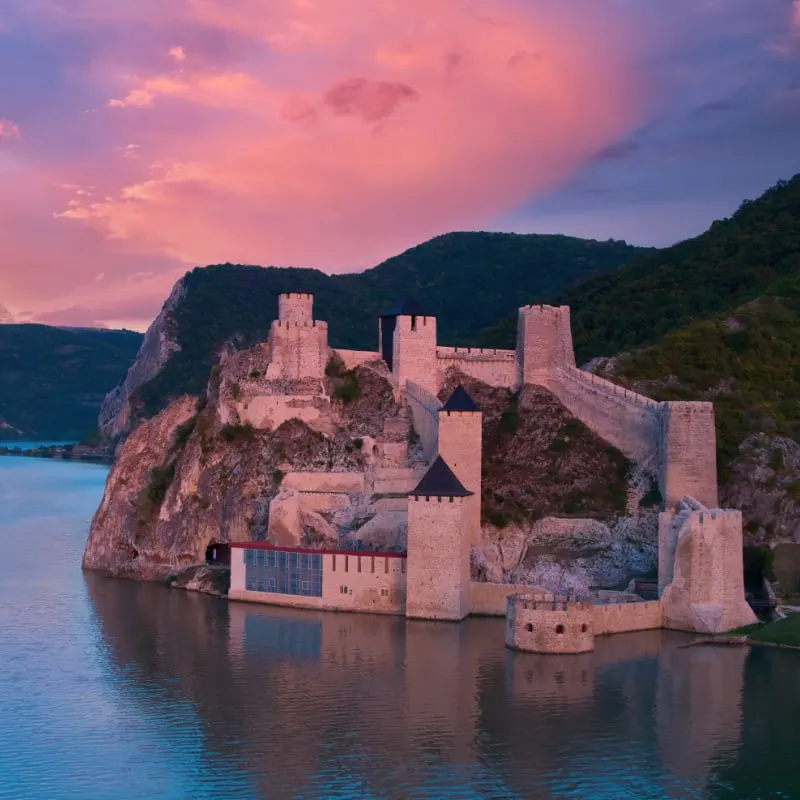
Any Iron Gate Tour is first a lesson in geometry: ten towers and a keep pinned to a limestone spur at Ridan bb, 12223 Golubac, where Đerdap National Park begins and the river stops behaving like a plain.
First recorded in 1335, the citadel passed between Hungarian, Serbian and Ottoman rulers with a frequency unmatched on the lower Danube, and the last Ottoman garrison did not withdraw until 1867. Golubački grad, as it is known in Serbian, was never a residence. Iron Gate Tour tours are therefore organised by zone rather than by room, because the structure is less a building than a machine for controlling a waterway.
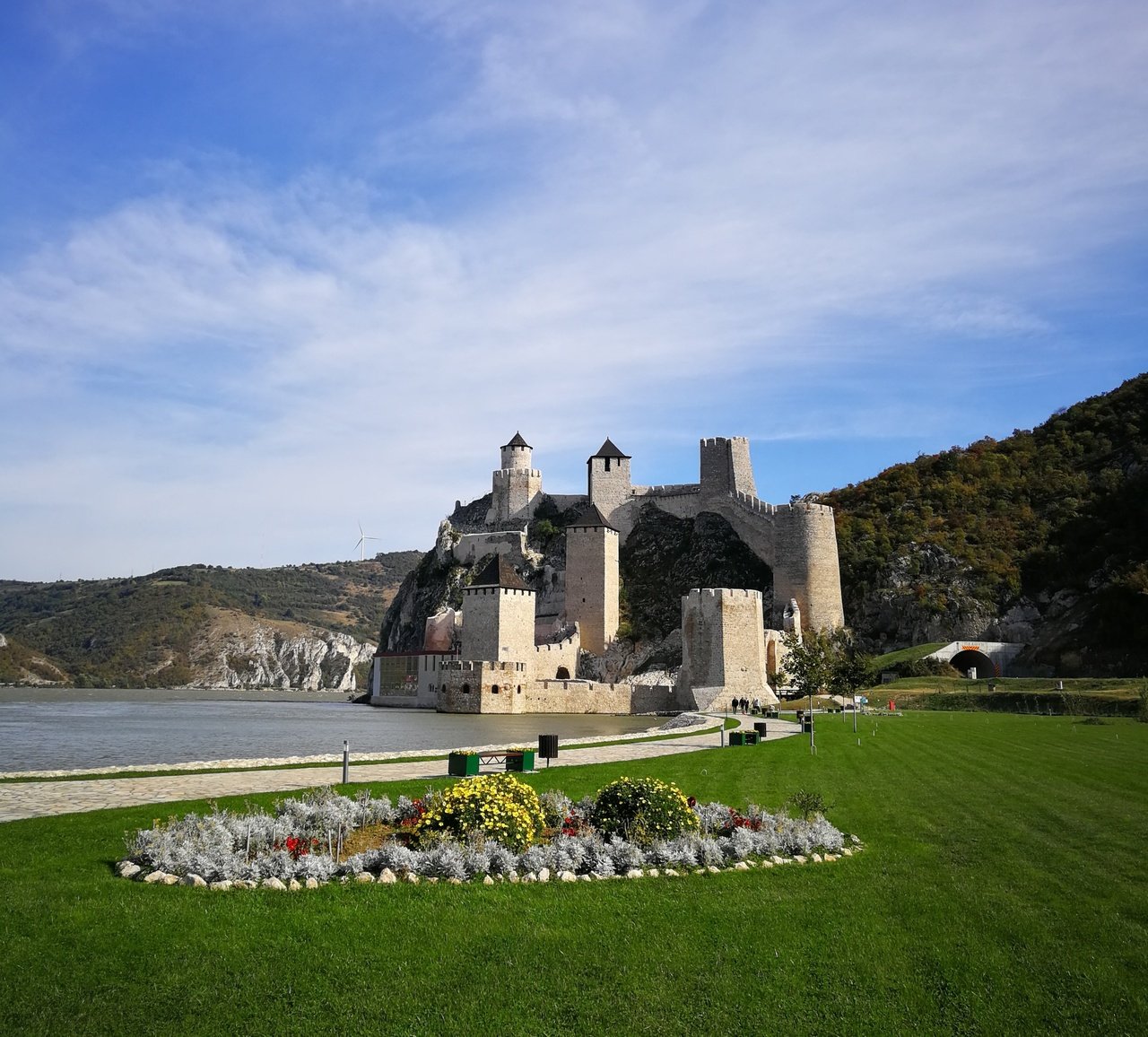
The plan falls into front town, back town and upper town, linked by curtain walls that follow the rock instead of correcting it. Several towers rise above twenty metres, each set at a different height so that no two command the same angle of fire. Tower 1 carried a public highway through its base for decades; the conservation programme of 2014 to 2019 pushed the traffic into a tunnel and returned the tower to the fortress. Tower 4, the Hat Tower, wears the octagonal Ottoman storey added for artillery. A standard Iron Gate Tour tour of the ramparts finishes in the upper town, high above the water, with the Đerdap gorge opening downstream. Iron Gate reviews return to that parapet more often than to any interior.
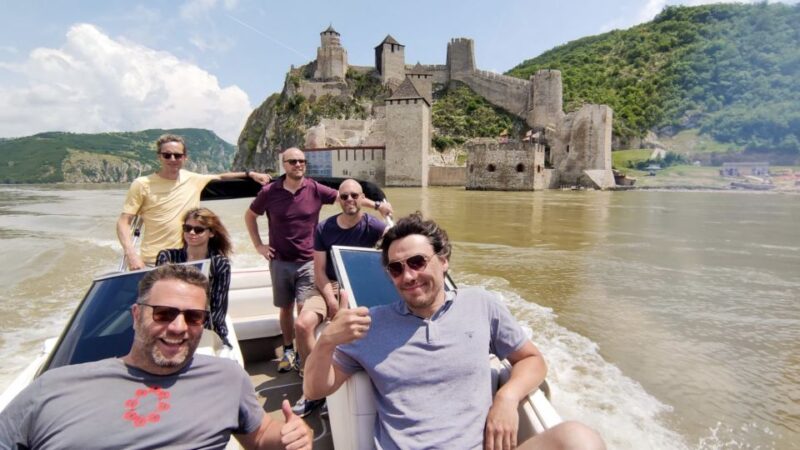
The water itself is modern. The closing of the Đerdap I dam in 1972 lifted the Danube by roughly thirty metres, submerging the lowest courses of masonry and, far downstream, the island of Ada Kaleh; what reads as a natural shoreline is a reservoir. An Iron Gate boat tour interprets the walls from that raised surface, while the Iron Gate Tour Belgrade route arrives overland, some 130 kilometres east of the capital along the Danube road. Iron Gate events fill the same courtyards through the season, and a Golubac Fortress tour on foot passes reconstructed timber galleries whose new joinery is left frankly visible against medieval stone. The result is not a ruin preserved. It is a repaired instrument, still aimed at the narrowest water on the continent's second-longest river.

The fortress stands on the hinge where the Danube stops widening and begins to cut.
Sturdy, closed-toe footwear is required for navigating the steep, stone-paved ramparts of the Golubac Fortress. Dress in breathable layers appropriate for the Danube riverside climate.
Standard backpacks are permitted, but large luggage must be stored at the visitor center. Security personnel may check bags at the entry point of your iron gate tour.
Personal photography is permitted throughout the exterior of the Golubac Fortress. Drones are strictly prohibited without prior written authorization from the site management.
Families are welcome, though small children require close supervision on the high, unrailed stone paths. Strollers are not recommended for the internal fortress climb.
Due to the medieval construction, many areas of the iron gate tour are not accessible to visitors with limited mobility. The visitor center provides an accessible overview of the fortress history.
Eating and drinking are restricted to designated zones near the visitor center. Visitors should carry sufficient water during an iron gate tour of the fortress ramparts.
Opening Hours
10:00–18:30
Address
Ridan bb, 12223 Golubac, Serbia
Entry Fee
950 RSD (Green zone basic entry)
Best Arrival
10:00–12:00
Visitor Center
Included in entry
Site Access
Ramparts and visitor center
Car · N/A · Public transport
Located on the E-75/Route 34; ample parking at the visitor center.
The Green zone basic entry fee of 950 RSD is non-refundable upon purchase. Please ensure your travel dates align with operating hours before finalizing.
Recommended time
2–3 hours
Allocating this time allows you to explore the stone ramparts and medieval towers that define the Golubac Fortress landmark. An iron gate tour typically involves traversing steep paths and narrow walkways, so visitors should account for slower movement in hotter periods. Purchasing your iron gate tour tickets in advance assists with logistics, while navigating between the fortress fortifications requires a steady pace to enjoy the Danube river views. To maximize your iron gate tour tours experience, ensure you have comfortable footwear for the climb between the towers.
Crowd levels through the day
Weather · crowds · average price — dots go green to amber to red as each metric rises.
Mild temperatures make walking the steep ramparts comfortable for visitors.
The fortress has limited shade; wear a hat and apply sunscreen before starting your iron gate tour.
Ridan bb, 12223 Golubac
Main entry point for all iron gate tour tickets
Get directionsGolubac Fortress guards the narrowest approach to the Danube's Iron Gate gorge, and its stones record six centuries of contested frontier. The first documentary mention comes in 1335, when Hungarian sources name the castle in accounts of border administration. Archaeologists date the oldest core — the upper town, keep, and citadel — to the fourteenth century, though Roman and early Byzantine occupation of the promontory is attested nearby at Vicinum. Any serious iron gate tour begins with that geography: a rock spur, a river narrows, and a toll point worth fighting for. Control changed hands repeatedly. In 1391 the fortress passed to Hungarian hands; by 1403 Sigismund of Luxembourg had ceded it to the Serbian despot Stefan Lazarević. Its commander Jeremija surrendered the castle to the Ottomans in 1427 rather than yield it to Hungary. The siege of 1428 followed, when Sigismund's army failed to retake it and the Polish knight Zawisza Czarny was killed during the withdrawal. Ottoman engineers later added a cannon tower on the western flank, thickening the lower walls for gunpowder warfare. Serbian and Hungarian forces briefly recovered the site in 1444 and 1481; permanent Ottoman possession resumed until 1867, when the garrison withdrew under the settlement that transferred Serbian fortresses to Prince Mihailo Obrenović. Modern history nearly undid the medieval work. The Đerdap I hydroelectric dam, completed in 1972, raised the Danube and submerged the lower towers, leaving masonry standing in water for decades. Earlier, the Belgrade–Đerdap road had been driven straight through Tower 9, a mutilation visitors on a golubački grad tour can still trace in the rerouted carriageway. A European Union–funded restoration ran from 2014 to 2019, consolidating all ten towers, opening the keep, and diverting traffic into a tunnel. What survives today is a nine-tower circuit across three fortified enclosures, climbing from riverbank to citadel — the substance behind most Danube landmarks itineraries. Guided iron gate tour tours interpret masonry phases; independent iron gate tour tickets allow the same ascent at one's own pace. Either way, the medieval, Ottoman, and twenty-first-century layers remain legible in the wall faces.
The fortress is first named in Hungarian documentary sources describing Danube border administration.
Sigismund of Luxembourg cedes Golubac to Serbian despot Stefan Lazarević.
Commander Jeremija hands the fortress to the Ottomans rather than to Hungary.
Sigismund's siege fails, and the Polish knight Zawisza Czarny dies during the retreat.
The Ottoman garrison withdraws as Serbian fortresses pass to Prince Mihailo Obrenović.
The Đerdap I dam raises the Danube and floods the lower towers.
An EU-funded restoration consolidates the towers and reroutes the road into a tunnel.
All three enclosures and the citadel remain open on a self-guided iron gate tour tour.
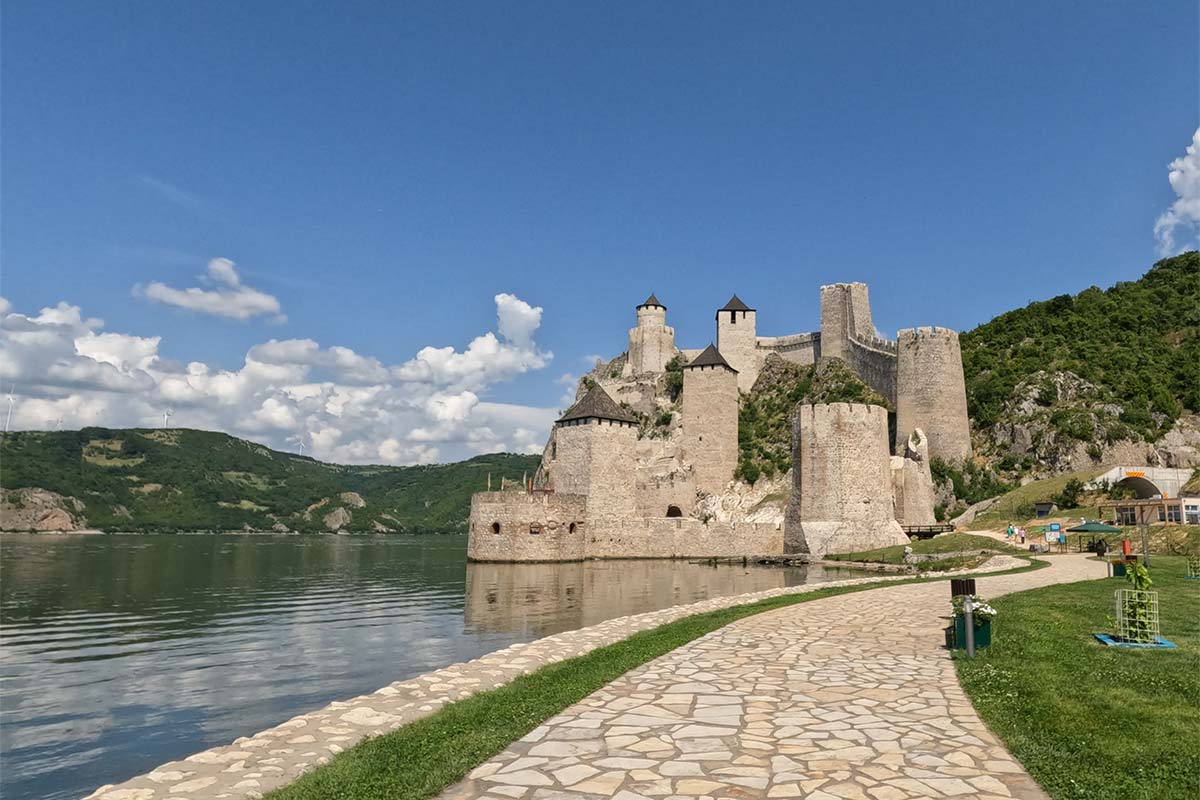
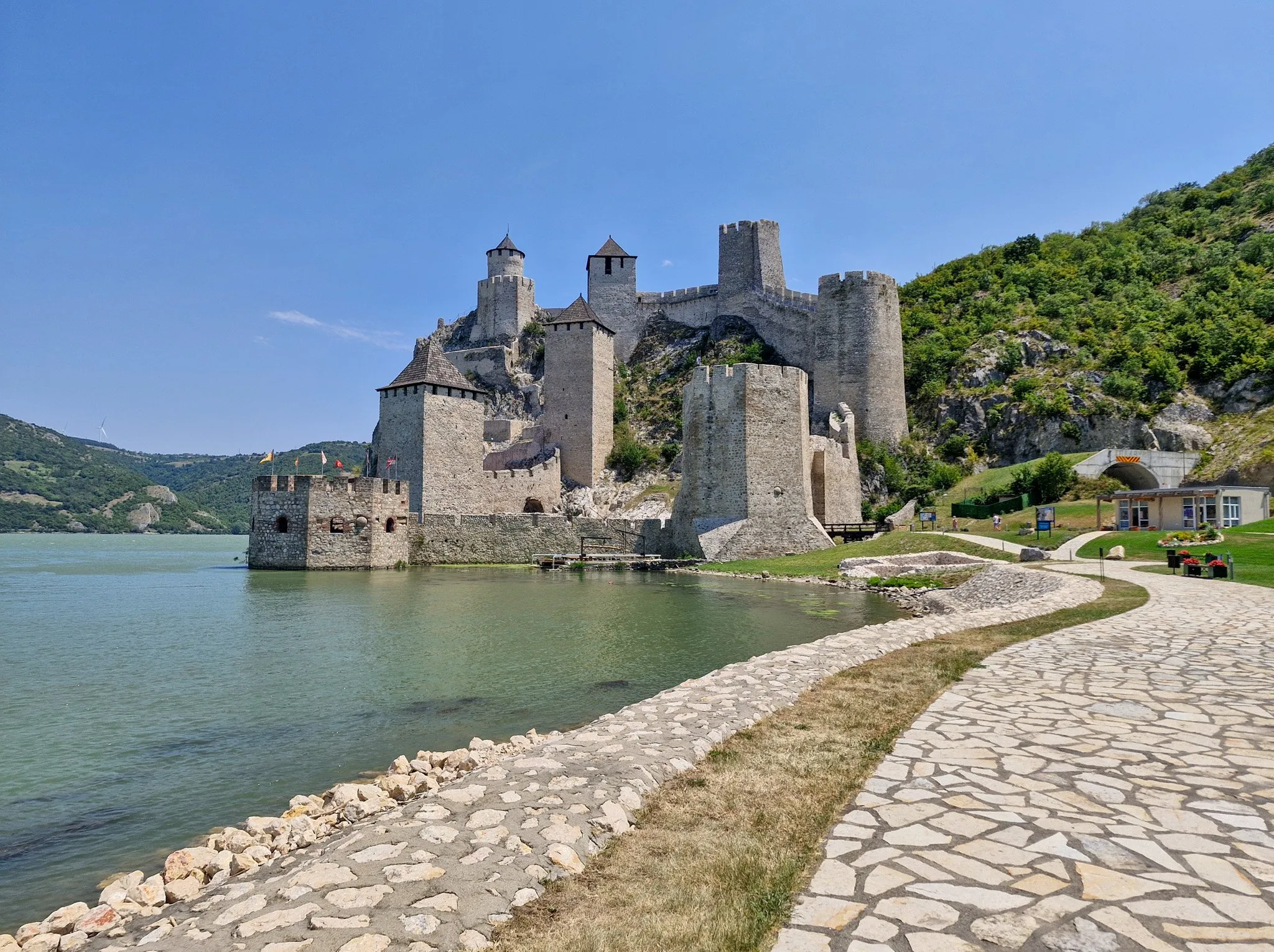
Position yourself along the paved path outside the fortress walls to capture the reflection of the towers on the river surface. This angle provides the classic wide perspective of the structure against the water for an iron gate tour.
Climb to the higher ramparts to look down over the inner courtyard and the layered stone masonry. Access depends on the current zone restrictions for your iron gate tour tickets.
Stand near the main gate to frame the heavy stone archway with the central keep rising in the background. This spot is perfect for those booking iron gate tour tours for a focused architectural shot.
Follow the path leading slightly uphill away from the main complex to gain elevation. This location offers a vantage point overlooking the defensive walls that make this Golubac sightseeing tour unique.
Visitors embarking on an iron gate tour will find a dedicated dining venue located right at the fortress, alongside traditional taverns in the immediate vicinity serving local Danube specialties. While iron gate tour tours offer limited refreshments, the nearby riverside establishments provide a more substantial experience for those securing their iron gate tour tickets in advance.
Located at the visitor center, this spot offers panoramic views of the Danube. It is ideal for a post-walk lunch featuring local river fish and refreshing beverages.;Taverna La-Guna
Real experiences from real travelers
We booked the iron gate tour from Belgrade and the first sight of Golubac Fortress coming around the bend genuinely stopped conversation in the van. The stone is warm to the touch in July and the wind through the gorge is constant once you climb past the third tower. Bring a hat, there is almost no shade on the upper ramparts.
Golubac Fortress sits right where the Danube squeezes into the Đerdap gorge, and standing on the top rampart you can see the Romanian bank clearly across the water. The restored steel walkways make the towers accessible without ruining the medieval masonry. Our guide knew the Đerdap National Park wildlife well and pointed out griffon vulture nesting cliffs downstream.
What sold me on the Golubac Fortress tour was less the fortress and more the view east into the narrows, where the cliffs close in and the river turns dark green. Late afternoon light was ideal for photos from the tower nearest the water. Steps are uneven in places, proper shoes matter.
The Đerdapska tvrđava is smaller inside than the exterior suggests, but the vertical climb through the donjon is the memorable part. We had rain on the drive and clear sky by arrival, typical for the gorge apparently. One tower was closed for masonry work, which nobody mentioned when we bought the iron gate tour tickets.
Joined a boat leg that passed directly under the walls and the scale only registers from the water. Comparing Danube landmarks, this one has the most dramatic setting I have seen in the Balkans. The current here is strong and the boat crew explained how the Đerdap dam raised the water level over the old lower gate.
March visit meant a nearly empty site and a sharp wind off the water. The fourteenth century walls at Golubac Fortress are in remarkable condition after the restoration, and the interpretive panels are in Serbian and English. Take a windbreaker even if the valley below feels mild.
Grew up two hours away and still bring visitors here for the tvrđava Golubac experience. The road tunnel that once ran through the fortress was rerouted, so the whole lower level can now be walked properly. Sunset from the hillside viewpoint upstream costs nothing and beats any paid vantage point.
Our small group iron gate tour tour combined the fortress with a stop at Lepenski Vir, which balanced the day nicely. Climbing the towers in midday June heat was demanding but the breeze at the top made it bearable. Cash was useful at the entrance kiosk.
Late November had mist sitting on the water until about eleven, then the gorge opened up. Among Serbian landmarks this ranks high for setting alone, and the fortress felt almost private that morning. Some upper walkways were slick with damp so grip mattered.
The skip-the-line Golubac entry saved us a queue on a hot Saturday when three coaches arrived at once. From the highest tower you look straight down onto boats passing through the narrows, which gives you a real sense of why anyone fortified this spot. Guided iron gate tours are worth it for the vulture and gorge geology detail you would otherwise miss.
Everything you need to know for your journey
Golubac Fortress is open Tuesday through Sunday from 10:00–18:30.
Yes, the 950 RSD Green zone basic entry includes parking at the visitor center.
Yes, families are welcome, but note that the ramparts are steep and require careful supervision for children.
The best arrival window is 10:00–12:00 to avoid mid-day crowds and ensure cooler temperatures.
Food is restricted to designated areas near the visitor center, not within the fortress ramparts.
Personal photography is permitted, but drones are strictly prohibited during your iron gate tour.
Most visitors spend 2 to 3 hours exploring the fortress ramparts and the visitor center.
The site's medieval layout makes full accessibility difficult, though the visitor center is accessible.
You can still enter until closing, but be prepared for higher temperatures and more visitors on the ramparts.
The site is closed every Monday throughout the year.
Site of prehistoric culture on the Danube banks.
Various guesthouses located along the Danube riverfront.
Join thousands of happy travelers who have discovered this incredible experience
Book Your Experience Now